

 Joe Pitts
Phoenix, and Arizona, are rapidly gaining in population. New Arizonans — workers, neighbors, friends, and family to many of us — have come to our state for social and economic opportunity. We simply aren鈥檛 building homes fast enough to put roofs over their heads.
from Zillow indicates that housing prices across Arizona have risen by 31.9% in the past year, compared to 12.5% from Oct. 2019 through Oct. 2020.
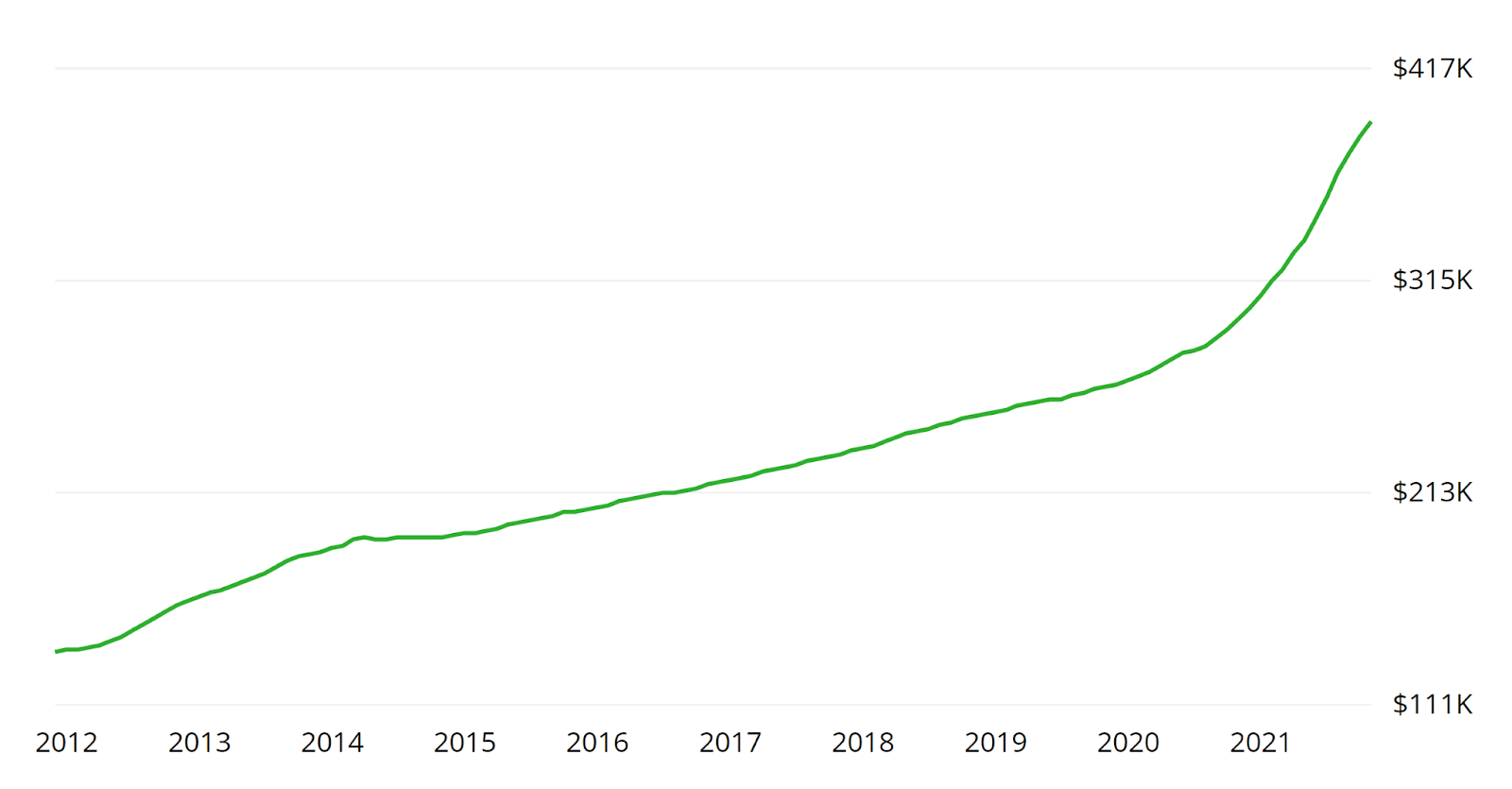
We have a supply and demand problem. Housing construction is not keeping pace with population growth, and the gap between housing supply and demand grows every day. This has caused Arizona鈥檚 housing prices to skyrocket, impacting one of Arizona鈥檚 distinct competitive advantages: affordable land and affordable housing.
Much of this issue centers around zoning. Phoenix and surrounding areas have a ton of 鈥渟ingle-family zoning鈥� — think suburbia — with little 鈥渉igh-density zoning鈥� — think apartments and townhouses. For many years, Arizona thrived as a suburban hub. As time has gone on, and the state has become an increasingly popular destination for emigrants from across the nation and world, the Valley and cities across the state have gotten quite crowded.
This isn鈥檛 to say that single-family housing has got to go. It most certainly does not. It is to say that policymakers ought to reconsider the balance of low- and high-density zoning.
Just take a look at Phoenix鈥檚 zoning map (this is just a cross-section, the full map can be found ):
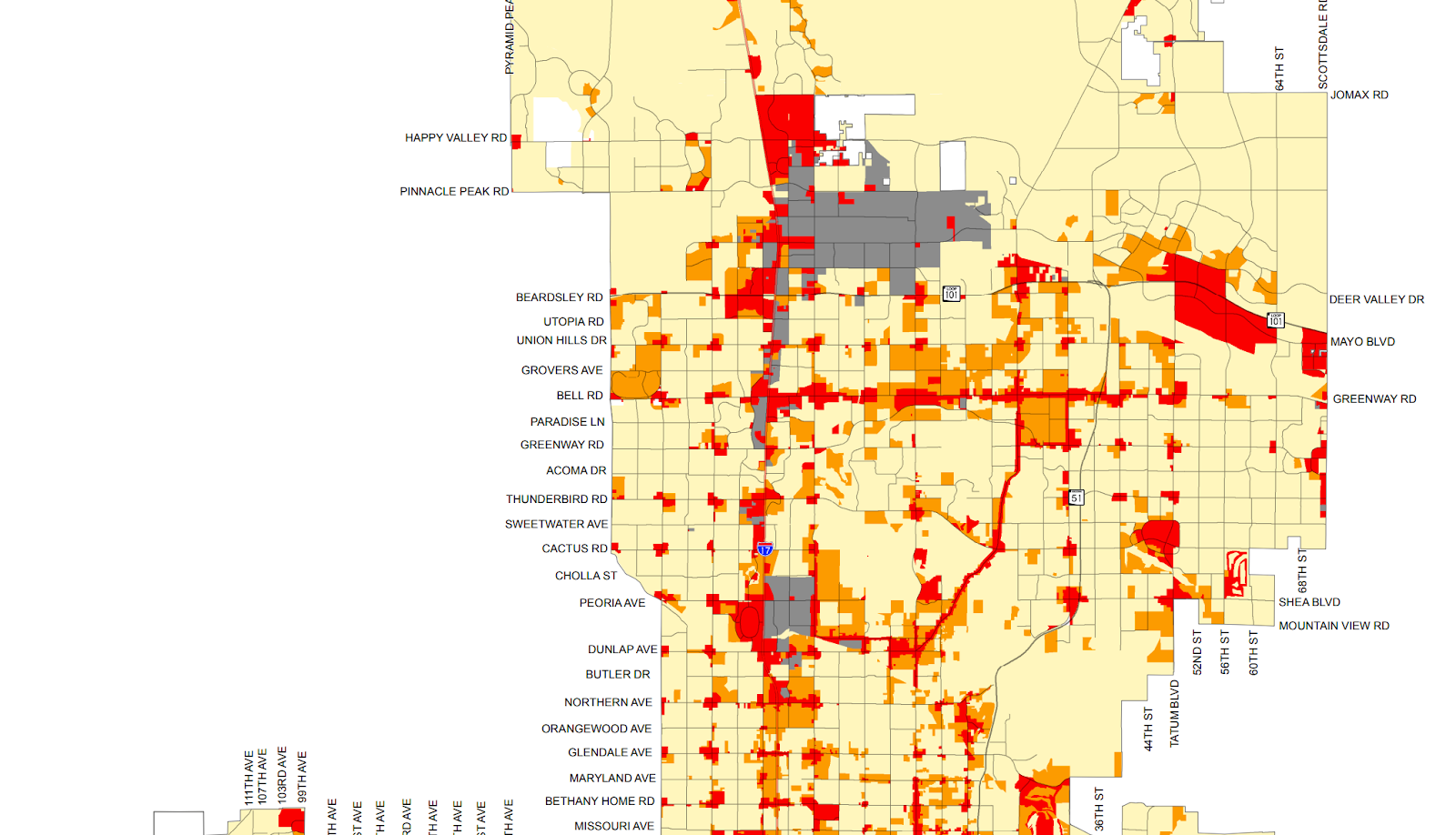
Lots in red are zoned for commercial use. Lots in orange are zoned for high-density housing. All that light yellow is single-family zoning.
Leaders in government should work with community leaders, developers, job creators, and residents to expand high-density zoning and allow builders to fulfill market demand for housing. Right now we鈥檙e choking the hose, and it鈥檚 raising prices for everyone.
Anti-growth policies that impede housing development include limited multi-family zoning, inclusionary zoning, and rent control.
Inclusionary zoning is a which 鈥渞equires or incentivizes private developers to designate a certain percentage of the units in a given project as below market rate (BMR)鈥攃heaper than their value on the market, and often less than the price of producing them.鈥� While it sounds good on paper, it ultimately reduces housing supply and raises housing prices.
Rent control, Megan McArdle of the Washington Post, is 鈥淸t]he one issue every economist can agree is bad.鈥� Housing is a commodity that is governed by the laws of supply and demand, and price controls in this market do nothing to expand housing access, and actually 鈥渞educe鈥� the incentive to supply rental housing.鈥�
Milton Friedman鈥檚 is relevant here: 鈥淥ne of the great mistakes is to judge policies and programs by their intentions rather than their results.鈥�
Thankfully, Arizona has a statewide ban on cities enacting inclusionary zoning and rent control. But a lack of high density zoning in the Phoenix valley is contributing to Arizona鈥檚 increasing dearth of affordable housing.
One of the most important solutions to rapidly rising housing prices is quite simple: build more housing. That can鈥檛 be done so long as cities and towns across the state opt for anti-growth zoning and regulatory policies that push out low-, middle-, and working-class residents who can barely afford to get by as is.
Policy solutions and thorough research on the issue already exist. Organizations like the have been fighting this battle for years and their policy recommendations deserve serious consideration as leaders race to solve this housing crisis.
The time is now for Arizona leaders, particularly those in cities and towns across the state who directly oversee zoning laws, to act on housing. Let鈥檚 venture beyond good intentions, and secure good outcomes as well.
Joe Pitts is studying business management (B.S.) and civic and economic thought and leadership (B.S.) at Arizona State University. He is an intern at the Arizona Chamber of Commerce & Industry, and the cofounder and Editor-in-Chief of the Western Tribune (westerntrib.com).


 91直播
91直播

 Danny Seiden


Add comment